Going Rogue
In September 2025, our friend group was just beginning a long drive from Idaho toward Grants Pass when our phones started pinging with wildfire alerts. Dry lightning ignited fires throughout the Siskiyous two days before our launch date on the Wild and Scenic Rogue. A mutual friend who coordinates commercial trips through the Wild and Scenic section informed us that all systems were still a go despite the multiple fires. They had put multiple groups on that morning, with few air-quality issues.
The next day, we called her again and got the report we were dreading. The lodges lining the Rogue were being evacuated. The fire was quickly spreading through the river corridor, air quality had deteriorated significantly, and helicopters were using the river below Blossom Bar to fill Bambi Buckets to try to extinguish hotspots. The mutual friend said that the BLM hadn’t closed the river and that private groups were putting on, but the commercial companies were starting to pull the plug. Our choice was to put on and be constantly worried about the fires, or to cancel and lose our lottery permit.
Our Idaho friends, fresh off their raft-guiding season, were skeptical of the reports and eager to see the river for themselves. They arrived in the Rogue Valley before us, and we soon got a call confirming our suspicions: the air quality index was well into the 300s, and the smoke was burning their eyes. Ultimately, we decided to cancel.
Last year, this was a difficult decision. But after securing a rare roll-over permit with the BLM for September 2026, we had no regrets. The side-hikes and peripheral activities that accompany a Wild and Scenic Rogue trip are a big part of what makes this trip one of the most popular river trips in Oregon.
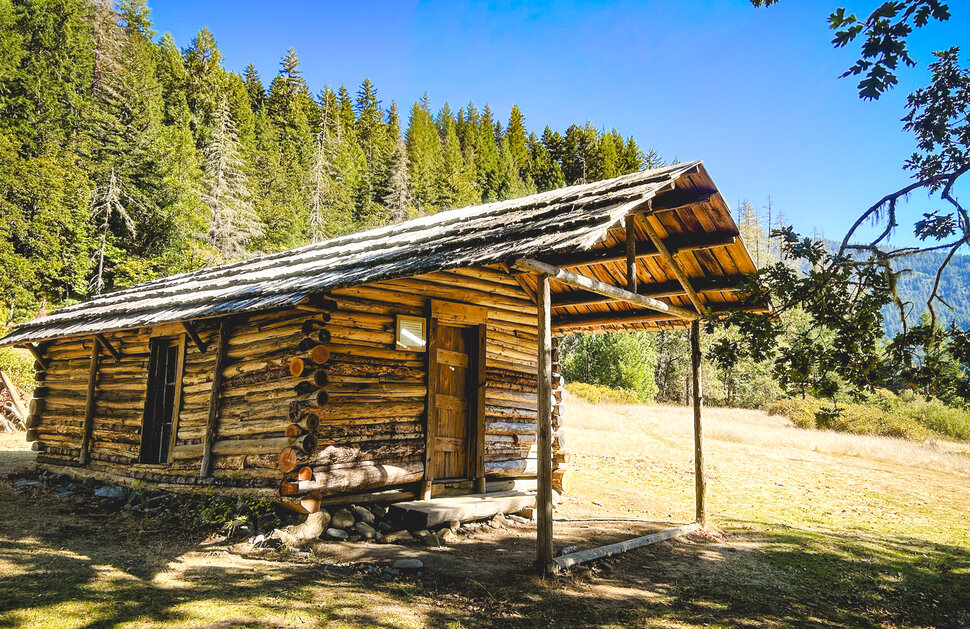
As a recent college graduate with a Journalism degree, a deep love for the nostalgia of Pacific Northwest angling history, and a love of reading and writing, I was naturally excited to set foot on Winkle Bar and wander up the meadow where Zane Grey built his Rogue River retreat in 1926, exactly 100 years ago.
On our third morning on the river, we pushed off the beach from our campsite at Battle Bar and began the relaxing, short float toward Winkle Bar. Most of the Rogue through the Wild and Scenic section is carved into ancient bedrock where the river has cut its course through volcanic basalt. Here, the river is bottlenecked by the steep southern Coast Range in a series of long, slow canyon pools with a steady succession of world-famous rapids. It is widely known for its whitewater, not so much for its classic steelhead swing water. But as the current pulled us downriver, the river took on a drastically different personality.
The river widens and shallows. The normally steep mountain slopes took on a more gradual gradient, with broad meadows interspersed with dense crowns of fir and spruce that cast long shadows across boulder- and bedrock-laden tailouts and riffles. The similarities to the flywater of the North Umpqua pre-burn were uncanny. If there was a place for an early-twentieth-century fishing and outdoors author to build a cabin, this was it. I’m sure it felt just as magnetic to Zane Grey 100 years ago as it did to me in 2026. As our rafts slid around a long bend in the river through two perfect swing runs, I knew we had arrived.
The BLM acquired the property and officially listed it on the National Register of Historic Places in 2008. Although the previous landowners had encouraged people to walk the property and enjoy this historic landmark, the property is now preserved for future generations. The original cabin is in fantastic condition after recent restoration projects.
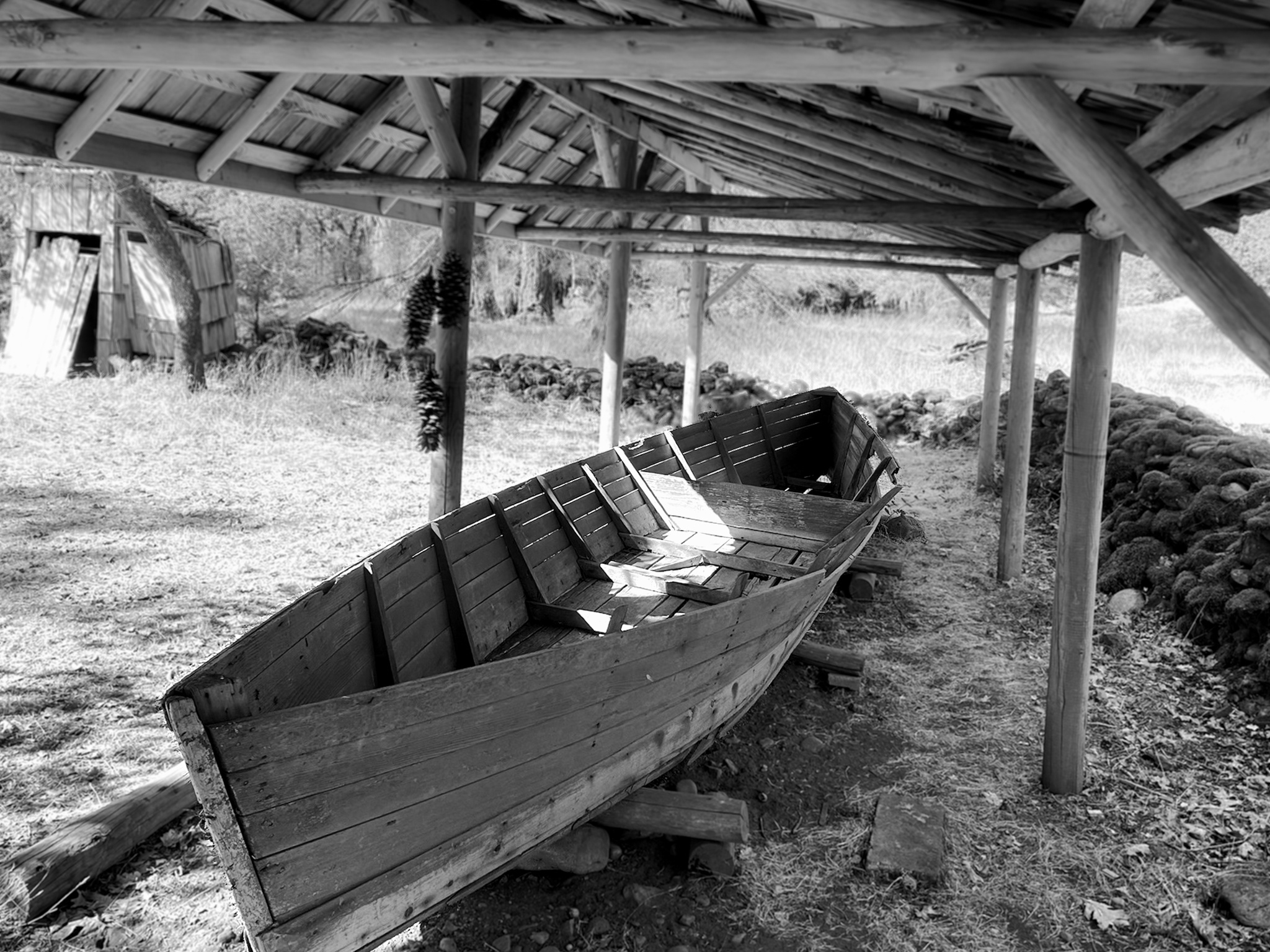
Near the cabin sits one of the original wooden Rogue River boats used by early Rogue boat guide Glen Woolridge, and likely Zane Grey himself. Looking at the boat, I couldn’t help but imagine what running that section of river would have been like in such a boat. Our rafts and kayaks made it through the rapids of the Wild and Scenic section without issue. But seeing that boat gave me a new appreciation for the boatmen who navigated the Rogue 100 years ago, long before they opened up passage through the more famous rapids with dynamite. Plenty of people keep the drift boat tradition alive on the Rogue River, and I have nothing but the utmost respect for the nerve and skill it takes to take aluminum boats, let alone wooden boats, down that section of river.
Zane Grey was a controversial figure during his time. His writing popularized the Rogue River for recreational fishing, much to the frustration of local anglers. So much so that he grew tired of the increased fishing pressure on the Rogue by the 1930s and began spending his summers on the now equally well-known waters of the North Umpqua below Steamboat Creek.
But Zane Grey’s writing, and the subsequent popularity of southern Oregon summer steelhead fishing, helped spark early conversations about fishing ethics and even watershed conservation. Salmon populations were already plummeting because of overharvest and cannery operations near Gold Beach, and his writings sparked conversations we are still having today about how we manage our rivers and fisheries.
Part of being a steelheader is having an appreciation for our recorded (and unrecorded) legacy of anglers who were drawn to rivers and fish. Standing on Zane Grey’s porch, the very epicenter of steelheader writing, was a moment I hope to relive again soon.
Leave a comment
Recent articles
View all
Still Swinging
Steelhead Closures: Now What?